
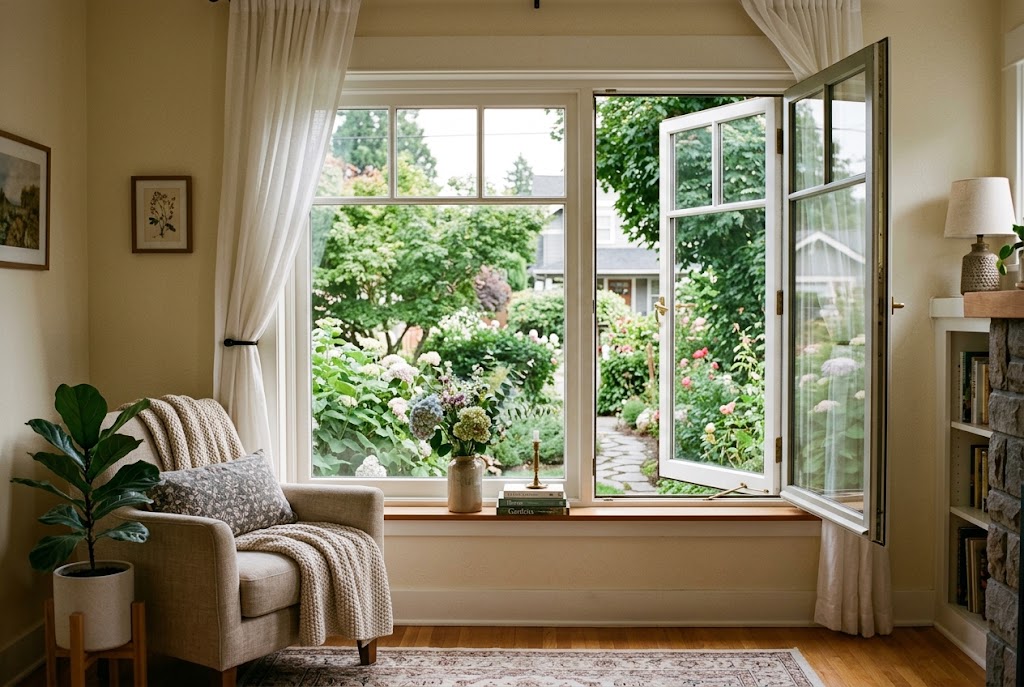
Casement windows new construction projects and replacement projects alike can benefit from, though for different reasons. There are many decisions to be made when selecting windows for your home, from style to functionality. Some places in your house don’t allow for opening a double-hung or slider window — over a kitchen sink, for example. These are the perfect spots for casement windows, which open with a simple crank instead of sliding.
This guide focuses on where casement windows fit best in new construction versus replacement projects, along with the material and glazing choices that go with them. For a deeper look at casement windows’ cost-effectiveness or design versatility specifically, see our other guides: Casement Windows: Efficient and Cost-Effective and Casement Windows Improve Your Home’s Beauty.
Why Casement Windows Work for New Construction
In new construction, casement windows give you full control over placement since you’re not working around an existing opening. That flexibility makes them a popular choice above sinks, in stairwells, or in any spot where a sliding or double-hung window’s operating style wouldn’t work. Their large, unimpeded glass area and narrow sightlines also make them a natural fit for modern and contemporary home designs planned from the ground up.
Why Casement Windows Work for Replacement Projects
In a replacement project, casement windows solve a specific problem: rooms where the existing window’s operating style is inconvenient or where ventilation is poor. Because the sash swings open rather than sliding, casement windows also seal more tightly against the frame than double-hung or slider windows, which helps reduce drafts and energy loss compared to what you’re replacing — especially valuable in Northern Utah’s cold winters and hot summers.
Choosing a Frame Material
Vinyl is the most popular casement window material, offering strong energy efficiency and low maintenance at an affordable price. It won’t rot, warp, or need repainting, making it a reliable default for most homes.
Wood brings a classic, natural look that pairs especially well with casement’s simple crank hardware, but it requires more regular maintenance and can be susceptible to moisture damage over time. Clad-wood options — wood interior with an aluminum or vinyl exterior — offer that same look with less upkeep.
Aluminum frames are durable and allow for especially narrow sightlines, maximizing your glass area and view. On its own, aluminum conducts heat readily, so look for a thermal break in the frame if energy efficiency is a priority alongside the slim profile.
Choosing Your Glazing
Double-pane windows use two panes of glass with a sealed gap between them, typically filled with argon gas. Argon is clear, odorless, and non-toxic, and it slows heat transfer while also reducing outside noise and condensation on the inside of the glass. It’s less expensive than krypton, another common fill gas, though it can slowly leak out of the seal over time.
Triple-pane windows add a third layer of glass and use a denser gas fill — often krypton — for even better insulation and noise reduction, along with stronger resistance to condensation. They cost more upfront than double-pane windows, but they’re worth considering for homeowners in particularly cold areas who want the extra comfort and efficiency.
Casement Windows New Construction and Replacement Projects Deserve
Murray Window Replacement can help you decide whether casement windows are the right fit for your new construction or replacement project, along with the best material and glazing for your home. Contact us or call (385) 786-6447 to schedule a consultation.