
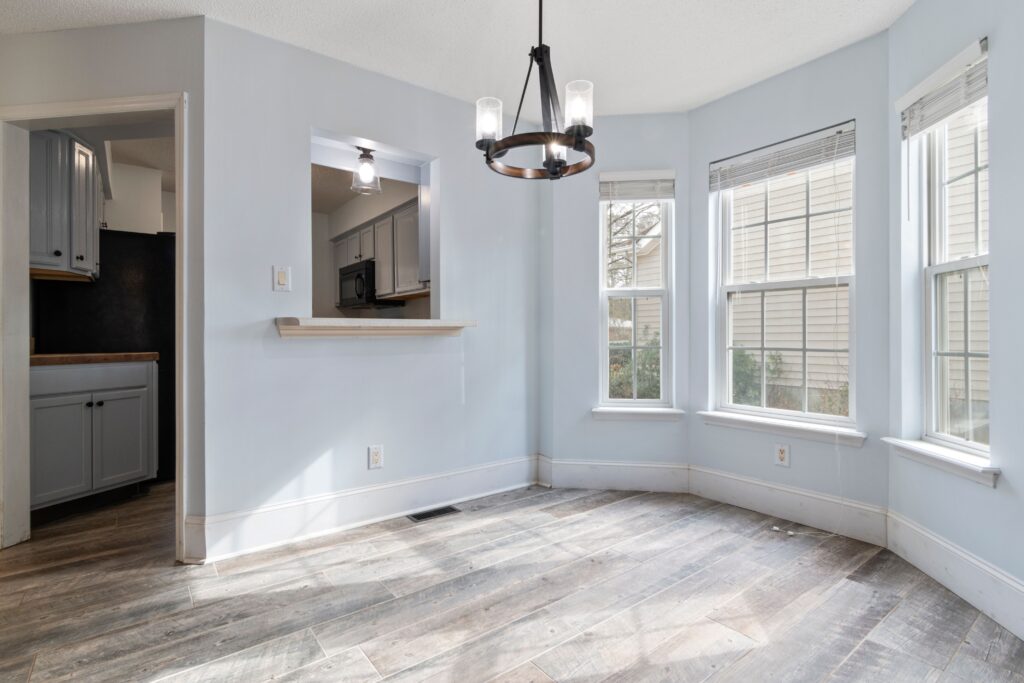
The window styles you choose shape how each room in your home looks, feels, and functions. A style that works beautifully in the living room can be a poor fit over a kitchen sink or in a basement bedroom. Thinking room by room helps you match each opening to how you actually use the space.
Murray’s climate also plays a role. Cold winters, hot summers, and strong high-elevation sun all put demands on your windows, so whatever style you choose, look for ENERGY STAR certified windows rated for your climate zone.
Kitchen
Over a sink or counter, reaching across to lift a heavy sash is awkward. Crank-operated casement windows solve this. They hinge on one side and swing outward with a simple turn of the handle, so you can open them fully without leaning over the counter.
Casements also catch passing breezes and seal tightly when closed, which helps with both cooking odors and energy efficiency. Awning windows, which hinge at the top and open outward from the bottom, are another good choice above counters.
Living Room
In the living room, views and natural light usually come first. Large fixed picture windows give you the most uninterrupted glass of any style, framing your view like artwork.
Because picture windows don’t open, they’re also among the most airtight options. If you want airflow, pair a center picture window with operable casements or awnings on each side. Bay and bow windows are another living room favorite, projecting outward to add light, a sense of space, and room for a window seat.
Bedrooms
Bedrooms need ventilation, easy operation, and safe emergency exits. Traditional double-hung windows are a popular fit. Both sashes slide up and down, so you can open the top for gentle airflow or the bottom for a stronger breeze, and many models tilt in for easy cleaning from inside.
Every sleeping room needs at least one window that meets building code for emergency escape, which sets minimums for opening size and sill height. Since a double-hung window only opens halfway, a casement of the same size often provides a larger clear opening. Your installer should confirm egress requirements before you pick a style.
Bathrooms
 Privacy and moisture control matter most in bathrooms. Awning windows mounted high on the wall let steam escape while keeping sightlines blocked, and their top-hinged design lets them stay open during light rain. Pair them with frosted or obscure glass for extra privacy.
Basements
If you’re finishing a basement with a bedroom, egress rules apply there too. Sliding windows and casements are common choices because they open wide within a limited wall height. Basement egress windows also typically need a properly sized window well outside.
Tilt-and-Turn Windows as a Specialty Option
Tilt-and-turn windows offer two ways to open. In tilt mode, the window hinges at the bottom and the top tips inward for secure ventilation. In turn mode, it swings inward on side hinges like a door, giving you full access to clean both sides of the glass from inside.
They’re less common in the US and usually cost more than standard styles, but they work well for upper floors and hard-to-reach openings.
Choosing the Right Window Styles for Your Home
The best approach is to match each room’s needs: easy reach in the kitchen, views in the living room, egress and airflow in bedrooms, and privacy in bathrooms. Mixing styles throughout your home is common and often gives the best result.
Not sure which styles fit your rooms? Murray Window Replacement can walk you through the options for each space. Call (385) 786-6447 or request a window replacement estimate to get started.