
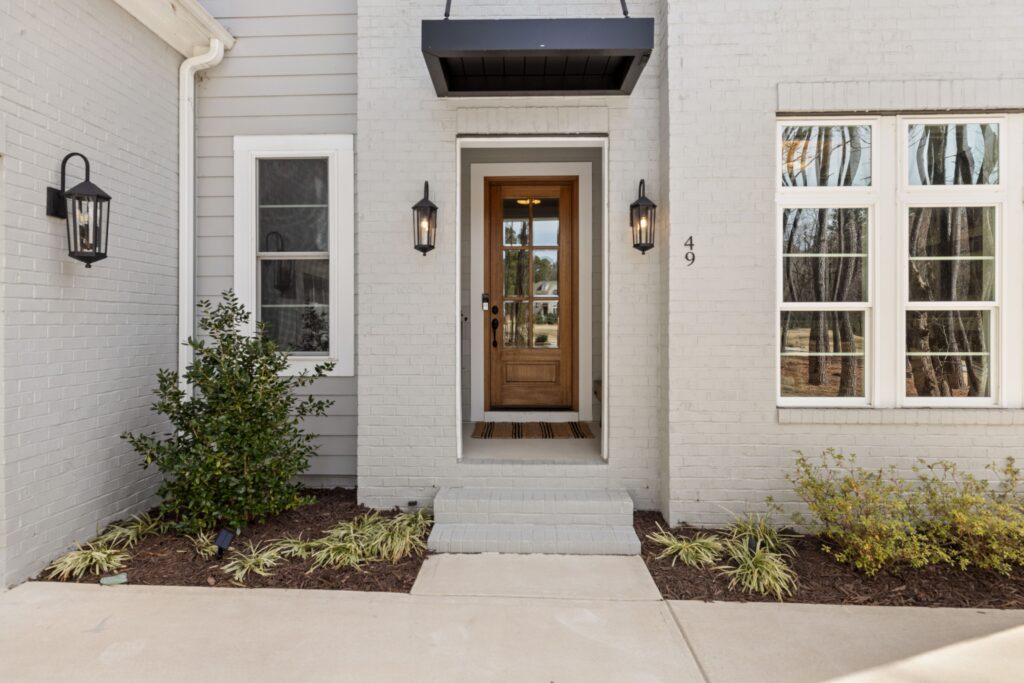
Your entry doors focal point should reflect your style, add value, provide security, and help lower energy bills. If you’re weighing overall style, durability, and efficiency rather than material specifics, see our companion guide, Front Entry Doors Murray UT, for a full breakdown of those benefits.
Residential entry doors are typically fabricated from wood, fiberglass, steel, or engineered composite materials. Each option has distinct benefits depending on your needs and design preferences.
Wood
A stylish front door is a key feature in the overall appearance of your home and helps boost its value. It can also improve security and energy efficiency, keeping your home comfortable year-round.
Wood entry doors are a traditional choice for homeowners because of their beauty and elegance. They’re available in a variety of styles, sizes, and colors, and can be custom crafted to match any architectural style. They can be carved, engraved, or painted, and offer strong durability — though they do require regular maintenance and can be susceptible to rot in damp climates.
Fiberglass
For homeowners who prioritize energy efficiency and durability, fiberglass doors are a great option and a strong alternative to wood, offering more longevity and a better return on investment over time. They can be customized with a wide range of decorative and obscure glass choices to complement any architectural style, and they insulate well — often filled with insulating foam that keeps your home warm in winter and cool in summer while helping reduce outside noise and utility bills.
Fiberglass is a strong, lightweight composite material made of thin glass fibers combined with resin, sometimes referred to as fiberglass-reinforced plastic (FRP or GRP). It’s a durable, low-maintenance option that resists denting, rust, and rot far better than wood.
Steel
 Steel doors offer some of the best security and durability of any material, resisting dents and forced entry better than wood or fiberglass. On their own, steel skins conduct heat readily, so look for a steel door with an insulating foam core — that core, not the steel itself, is what gives the door its energy efficiency, keeping interiors warmer in winter and cooler in summer.
New steel front doors can also increase curb appeal and offer a strong return on investment. For added efficiency, look for a door with a Low-E coating on any glass inserts, which reflects the sun’s rays and helps keep your interior comfortable.
Engineered Composite
Engineered composite doors combine multiple materials — often a wood-fiber core with a durable exterior skin — to balance the look of wood with better resistance to warping, rot, and moisture damage. They typically require less maintenance than solid wood while still offering a range of finishes and styles, making them a solid middle-ground option for homeowners who want wood’s appearance without wood’s upkeep.
Choosing the Right Material
Your front door is not only a major part of the first impression your home makes, but it also keeps you and your family safe. It’s important to choose a material that suits your needs in terms of aesthetics, maintenance, longevity, and energy efficiency.
For homeowners who prioritize security, a steel door with a foam core is one of the strongest choices — resistant to being kicked in while still offering solid insulation. Fiberglass is another popular option for Murray, UT homes: it’s available in designs that mimic the look of wood grain, stays lightweight and rust-resistant, and offers excellent insulating properties that help reduce power bills year-round.
Your Entry Doors Focal Point, Done Right
Murray Window Replacement can help you compare wood, fiberglass, steel, and engineered composite doors to find the right fit for your home. Contact us or call (385) 786-6447 to schedule a consultation.