
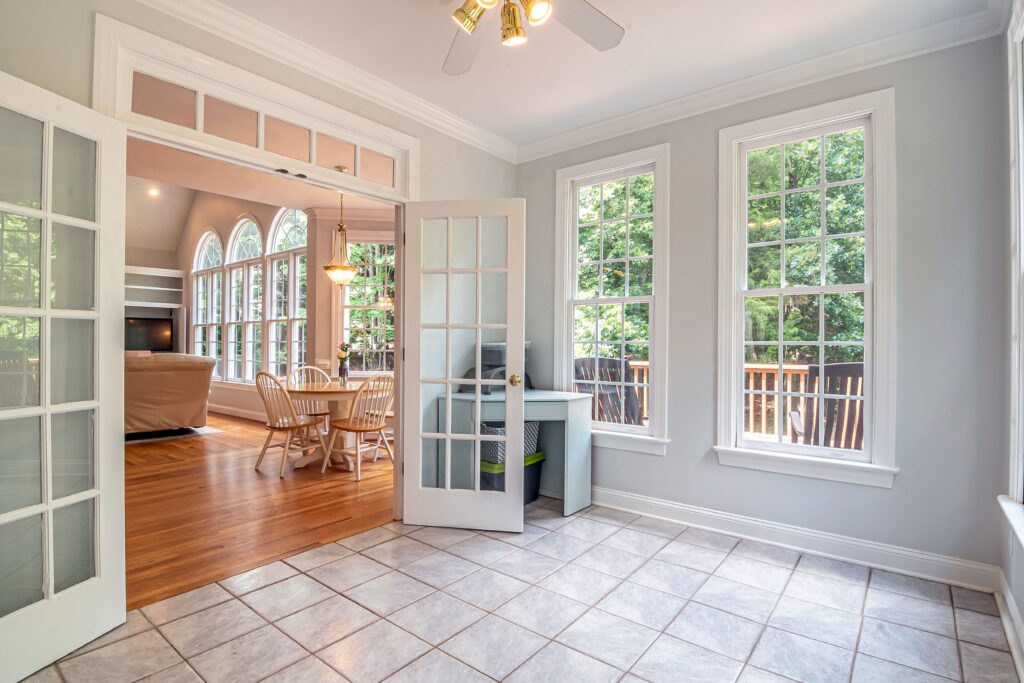
Knowing how to choose the right residential windows for your home starts with looking past price alone. Your home deserves high-quality windows that reduce energy costs and make your space more comfortable. When you start shopping, prioritize windows carrying the ENERGY STAR label and a rating from the National Fenestration Rating Council (NFRC) – these confirm a window’s efficiency has been independently verified, not just claimed by the manufacturer. From there, the decision comes down to a few key choices: material, architectural style, glazing, and installation method. Here’s how to think through each one.
Choosing a Material
Vinyl. Vinyl is the most popular replacement window material, prized for its affordability and energy efficiency. It insulates well in both winter and summer, resists rot and moisture, and needs virtually no maintenance beyond occasional cleaning — no painting or refinishing required. For most Murray, UT homeowners looking for the best value, vinyl is the natural starting point among today’s vinyl replacement windows.
Wood. Wood offers a timeless, natural look that vinyl and composite frames can’t fully replicate, making it a strong fit for older or historic homes. It requires more upkeep — periodic painting or staining to protect against moisture damage — but clad-wood windows solve much of that trade-off, pairing a wood interior with a low-maintenance aluminum or vinyl exterior.
Picking an Architectural Style
Modern. Modern-style windows are defined by clean, minimal lines and large panes of glass with little to no grid pattern. They pair especially well with high-performance glazing, since larger, uninterrupted panes make the most of efficient glass.
Contemporary. Contemporary windows share Modern’s clean-line sensibility but stay open to evolving trends and mixed materials, making them a flexible choice for homes that don’t fit neatly into one architectural period. Both styles offer noticeably better energy efficiency than older, heavily-divided window designs.
Craftsman. Craftsman-style windows are known for grouped, multi-pane upper sashes set above a single lower pane — a hallmark of early-1900s bungalow homes. They typically come in wood or wood-look frames that complement a home’s existing woodwork and trim.
Victorian. Victorian windows are known for ornate detailing — intricate grid patterns, decorative muntins, and sometimes arched or curved tops — designed to add character to a home. They’re a natural fit for homeowners restoring or complementing a historic property.
Selecting Your Glazing
Double-Pane. Double-pane windows are the standard upgrade for homeowners looking to improve energy efficiency without paying a premium. Two glass panes are separated by a gap filled with an insulating gas like argon or krypton, which slows heat transfer and lowers energy bills. They also cut down on outside noise and block UV rays that fade flooring and furniture — both of which can help boost resale value, a hallmark of today’s energy efficient windows.
Triple-Pane. Triple-pane windows add a third layer of glass for even better insulation and noise reduction, using the same argon or krypton fill found in double-pane units. They cost more upfront, but the added insulation and resale value can make them worth it for homeowners in colder climates. If you’re upgrading to triple-pane, pairing the investment with additional attic insulation and air sealing will get you the most out of it.
Choosing an Installation Method
 Full-Frame vs. Insert. A full-frame replacement removes the existing frame, sash, and trim down to the studs — the right call for homes with frame damage, rot, or moisture problems. If your existing frame is still structurally sound, an insert (or pocket) replacement fits a new window directly into it, which is faster and more affordable than a full-frame job, making it a popular window replacement option.
Look for Certifications
ENERGY STAR & NFRC. When comparing windows, prioritize ones carrying the ENERGY STAR label. To earn it, a window must meet performance metrics certified by the NFRC, so you’re getting an independently verified efficiency rating rather than a manufacturer’s own claim. Many ENERGY STAR-rated windows also use tempered safety glass, a separate feature designed to break into small, rounded pieces rather than sharp shards if it’s ever broken.
Don’t Forget Egress Requirements
If you have — or plan to finish — a basement bedroom or other living space, building code requires an egress window: one large enough for someone to safely exit during an emergency. Beyond the safety requirement, adding an egress window can raise your home’s value even if the rest of the basement stays unfinished.
How to Choose the Right Residential Windows: Get Expert Help.
With so many materials, styles, and glazing options to weigh, it helps to work with a company that offers a wide range of products, clear warranty terms, and straightforward quotes. Murray Window Replacement can help you choose the right residential windows for your home and budget. Contact us or call (385) 786-6447 to schedule a consultation and get started.