

Noise-reducing windows can make a real difference if your home sits near a busy road, rail line, or active neighborhood. In Murray, homes near I-15, I-215, State Street, and the rail corridors deal with steady traffic and train noise that older windows let right in. The good news is that quality replacement windows, chosen with sound in mind, can make your home noticeably quieter.
How Sound Gets Through Windows
Sound travels through windows in two ways: through the glass itself and through gaps around the sash and frame. Even a small air leak lets in a surprising amount of noise. That’s why reducing noise depends on three things working together: the glass, the window style, and the installation.
Understanding Sound Ratings
Two ratings help you compare how well windows block sound:
- STC (Sound Transmission Class): Measures how well a window blocks mid- and high-frequency sounds like voices and barking dogs.
- OITC (Outdoor-Indoor Transmission Class): Weighted toward lower frequencies like traffic, trucks, trains, and aircraft.
For most outdoor noise in Murray, OITC is the more useful number. This guide to OITC ratings explains how the rating reflects real-world traffic and aircraft noise. In both cases, a higher number means better sound control.
Glass Options That Reduce Noise
Laminated Glass
Laminated glass bonds two layers of glass with a plastic interlayer that dampens vibration. It’s the most effective single upgrade for reducing noise, and often only one pane in the unit needs to be laminated.
Dissimilar Glass Thickness
Using two panes of different thicknesses helps because each pane vibrates at a different frequency, so sound that passes through one is partially blocked by the other. It’s a lower-cost way to improve sound control.
Double-Pane and Triple-Pane Glass
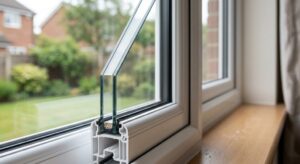 Upgrading from single-pane to double-pane glass makes a noticeable difference. Triple-pane glass can help further, but if noise is your main concern, a double-pane unit with laminated glass often outperforms a standard triple-pane unit.
Window Styles and Noise
Windows that close tightly against their seals block more sound. Tight-sealing casement windows and fixed picture windows typically outperform sliders and double-hung windows, which rely on sliding seals that let in more air and sound. If you’re replacing windows on the noisiest side of your home, style matters as much as glass.
Installation Makes or Breaks Sound Control
The quietest glass won’t help much if air leaks around the frame. Gaps between the window and the wall opening need to be properly insulated and sealed. Expert window installation ensures the new windows are airtight, which is just as important for sound as it is for energy efficiency.
Setting Realistic Expectations
No window makes a home completely soundproof. Walls, doors, vents, and attic spaces also let sound in. But replacing older windows with noise-reducing windows usually delivers the biggest improvement, since windows are typically the weakest point in your home’s sound barrier.
Choosing Noise-Reducing Windows for Your Murray Home
Start with the rooms that matter most, like bedrooms and home offices facing the street. Prioritize laminated or dissimilar glass, choose tight-sealing styles, and make sure the installation is airtight. The right noise-reducing windows can turn a loud room into a comfortable one.
Ready for a quieter home? Call Murray Window Replacement at (385) 786-6447 or request a window replacement estimate to talk through your options.