
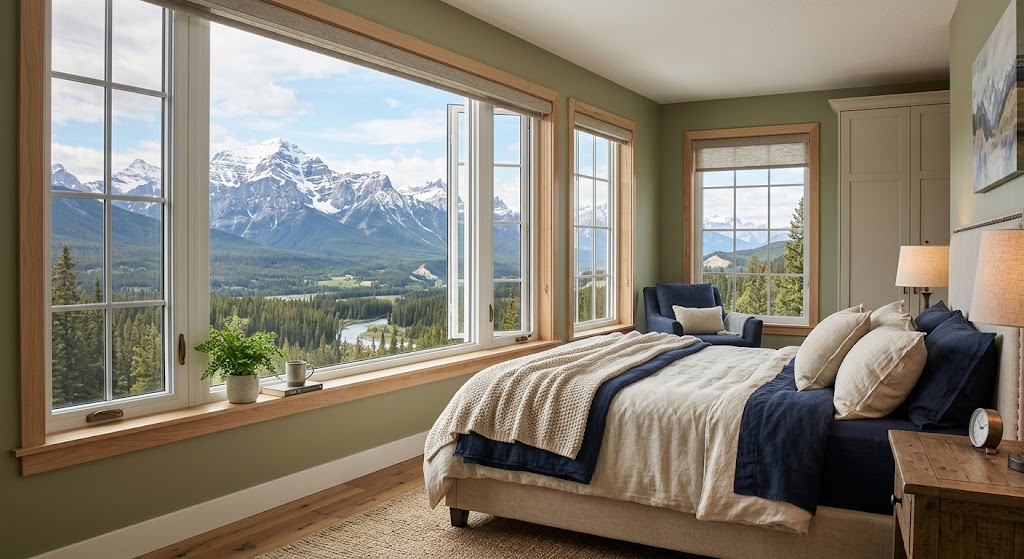
Deciding between vinyl vs fiberglass windows — with composite as a third option — comes down to how much you want to spend and what performance you need. Replacing old windows is an affordable upgrade that can dramatically improve your home’s curb appeal and energy efficiency. You’ll notice a difference in your cooling and heating costs right away.
If you’re looking for a window replacement option that balances cost and efficiency, vinyl is a great place to start — but it’s not your only option. Here’s how vinyl compares to fiberglass and composite windows.
Vinyl: The Cost-Effective Standard
Vinyl windows are durable, easy to maintain, and come in a wide variety of styles that can be customized to complement any home, all while typically costing less than other materials. Advanced vinyl frames are available in a wide range of colors, and some are welded rather than fastened and caulked, making them more durable and weather resistant. Double-hung vinyl windows can also be fitted with decorative grilles that accentuate your home’s architectural style.
Vinyl frames never need painting and won’t develop the fungus growth that can affect wood over time. One thing to watch for: older vinyl windows can sometimes sag, which can be a cosmetic issue and, in some cases, make the window harder to operate — though this problem is relatively rare in quality, newer products.
Fiberglass: A Step Up in Performance
Fiberglass windows are similar to vinyl in many ways but typically cost more. In exchange, they offer excellent thermal performance and are available in double-hung, casement, slider, awning, bay, and bow styles, giving you more configuration options than vinyl typically offers.
Composite: Maximum Durability
 Composite windows blend multiple materials, such as wood and vinyl or aluminum and fiberglass, into a single frame. They’re extremely durable and visually appealing, though they generally cost more than vinyl. Composite windows can have a natural wood look or be painted in colors that mimic light and dark oak, and they’re a strong choice for homes that need to withstand extreme weather. Many composite windows also feature sashes that tilt in, making them easier to clean than fixed designs.
What to Look for, Whatever Material You Choose
Regardless of which material you choose, look for windows that carry the ENERGY STAR label, along with Low-E glass and argon gas fill to reflect heat away from your home in summer and prevent heat loss in winter.
Choose a high-quality frame from a reputable manufacturer, since a poorly made frame — in any material — can lead to air and water infiltration that causes expensive damage down the road. Also ask about the warranty, and specifically whether it covers both labor and materials. A strong, transferable warranty protects your investment even if you sell your home before the coverage period ends.
Compare Vinyl vs Fiberglass Windows Today
Murray Window Replacement can help you compare vinyl, fiberglass, and composite windows to find the right fit for your home. Contact us or call (385) 786-6447 to schedule a consultation.