
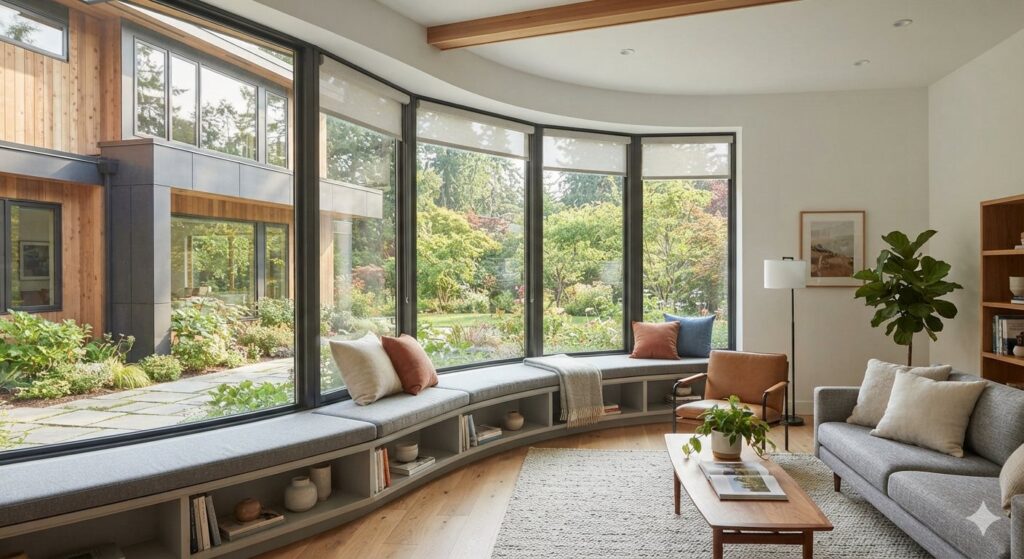
Choosing between bay vs. bow windows comes down to the shape you want, the space you have, and how you plan to use the area inside. Both project outward from the wall to add light, views, and a sense of extra room, but they look and function differently. Here’s how to tell them apart and decide which one fits your Murray home.
What Is a Bay Window?
A bay window typically uses three windows: a large center window flanked by two narrower side windows set at an angle, often 30 or 45 degrees. The center is usually a fixed picture window, while the side units are operable casements or double-hungs for ventilation. Three-panel bay windows create a distinctly angular projection with a deeper nook inside.
What Is a Bow Window?
A bow window uses four or more windows, usually of equal size, joined in a gentle curve. Curved bow windows project less from the wall than most bays but span a wider area, creating a soft, rounded look. Some or all of the units can be operable casements, depending on how much airflow you want.
Bay vs. Bow Windows: Key Differences
Shape and Look
Bays have a crisp, angular profile, while bows have a smooth, rounded arc. Bays often complement Colonial, Victorian, and traditional homes, and bows suit homes where a softer curve fits the architecture.
Interior Space
Because bays usually project farther, they tend to create a deeper area for a window seat, desk, or breakfast nook. Bows add a wider, shallower curve that expands the room’s feel without as much floor depth.
Views and Light
A bay’s large center window gives a wide, uninterrupted view straight ahead. A bow spreads the view across more panels for a panoramic effect, though with more frames dividing the glass.
Wall Size
Bows generally need a wider wall because they use more units. Bays can fit smaller openings, which makes them easier to add to many rooms.
Cost
When comparing bay vs. bow windows on price, bows often cost more because they use more windows and more mulling. Size, glass, and frame material will affect the price of either option.
Installation and Support
 Both bay and bow windows project beyond the wall, so they need proper support from brackets, cables, or a framed base, plus a roof or canopy above to shed water. The seat board and head board should be insulated to prevent cold spots and condensation. Professional window installation makes sure the unit is supported, flashed, and sealed so it doesn’t sag or leak over time.
Energy Efficiency
Both styles add a lot of glass, which can mean more heat loss in winter and heat gain in summer. In Murray’s climate, choose insulated, Low-E glass and look for ENERGY STAR certified windows to keep the projection comfortable year-round.
Choosing Between Bay vs. Bow Windows
If you want a deeper nook and a strong focal point, a bay is usually the better fit. If you have a wider wall and prefer a soft, panoramic curve, a bow may suit you best. Either way, both styles add light, character, and value when they’re well supported and properly installed.
Not sure which fits your space? Call Murray Window Replacement at (385) 786-6447 or request a window replacement estimate to compare options for your home.