
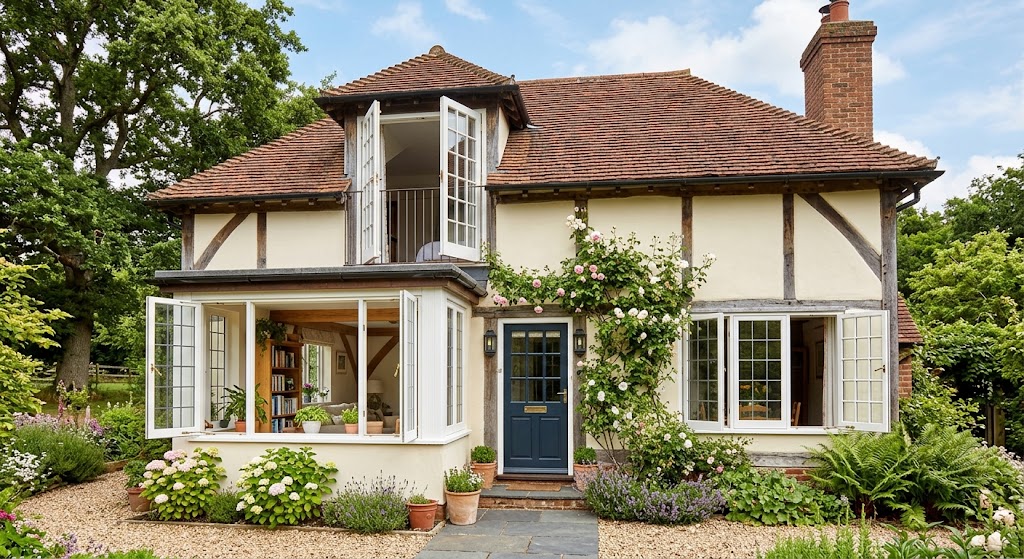
Casement window hardware does the daily work of opening, holding, and sealing your windows, and when it starts to fail, even a well-built window becomes frustrating to use. A crank that grinds, a sash that won’t close tight, or a lock that won’t turn usually points to a specific part, and knowing which part makes the fix much easier.
This guide explains how the crank, hinges, and locks on a casement window work together, what commonly goes wrong, and when repair stops making sense. If you’re still deciding on a style rather than maintaining windows you already have, our casement window options cover the basics.
The Crank Operator: How a Casement Window Opens
A casement window hinges on one side and swings outward, and the crank is what makes that practical. The crank handle turns a small gear inside a housing called the operator, which is usually mounted along the bottom of the frame. The operator moves a folding arm connected to the sash, pushing the window open as you turn and pulling it closed as you reverse.
Because the operator does the pushing and pulling, a smooth crank is a good sign that everything else is aligned. Many handles fold flat when not in use, which keeps them clear of blinds and curtains.
Hinges: What Carries the Sash
The operator arm moves the sash, but on most casement windows the hinges at the top and bottom of the hinged side carry its weight and guide it as it swings. These small parts take a lot of stress, especially on large sashes. Hardware made of stainless steel or with a protective finish resists corrosion better, which matters on windows that see winter moisture.
Over time, loose screws or worn hinge parts can let the sash sag slightly. That pulls it out of alignment with the frame and makes it harder to close and latch.
Locks and Latches: How the Window Seals
The lock, usually a handle on the latch side of the sash, does more than keep the window secured. Turning it pulls the sash firmly against the frame, compressing the weatherstripping around the edges. This is why casement windows generally have lower air leakage than sliding windows, according to the Department of Energy’s window types guide. Many casement windows, especially larger ones, use multipoint locks that engage the frame at several spots along the sash for a more even seal.
Common Casement Window Hardware Problems
 Most hardware complaints fall into a few patterns:
- Stiff or hard-to-turn crank: dirt, dried lubricant inside the operator, or a sash that has fallen out of alignment.
- Crank spins without moving the window: a stripped gear, or an arm that has come loose from the sash or operator.
- Sash won’t close tight: loose hinge screws, a sagging sash, or worn weatherstripping.
- Lock is hard to turn or doesn’t line up: the sash isn’t pulling in squarely, often from the same alignment issue.
If several of these problems show up at once, or they appear on a newer window, the cause may be how the window sits in the opening rather than the hardware itself. Poor fit is one reason professional window installation matters.
Simple Maintenance for Utah Seasons
Casement window hardware lasts longer with a little yearly care:
- Wipe down the operator, hinges, and tracks each spring and fall to remove dirt and debris.
- Apply a silicone-based or dry lubricant to the moving parts once a year. Avoid heavy grease, which attracts dust and can gum up the operator.
- Check that hinge and arm screws are snug, and tighten any that have worked loose.
- Close and latch windows before strong wind, since an open casement acts like a sail and strains the arm and hinges.
In winter, a sash can freeze to its frame. If the crank feels stuck, don’t force it, because that is how arms and gears break. Let the window thaw before trying again.
Repairing or Replacing Casement Window Hardware
A stiff crank, loose screws, or a worn lock are usually inexpensive to fix. Replacement operators and locks are typically matched to the window’s brand and model, so note the manufacturer if you can find it and bring the old part when shopping. If the sash is heavy, on an upper floor, or won’t stay in position, have it serviced rather than risking a fall.
Repair stops making sense when the frame is warped, parts are no longer available, or the glass has fogged between the panes along with the hardware trouble. At that point, a window replacement service can help you decide whether it’s time to start fresh.
Taking Care of Your Casement Window Hardware
Keeping casement window hardware clean, lubricated, and aligned keeps your windows easy to open and tight when closed, season after season. If a hardware problem has you wondering whether to repair or replace, contact Murray Window Replacement or call (385) 786-6447 to talk it through.