
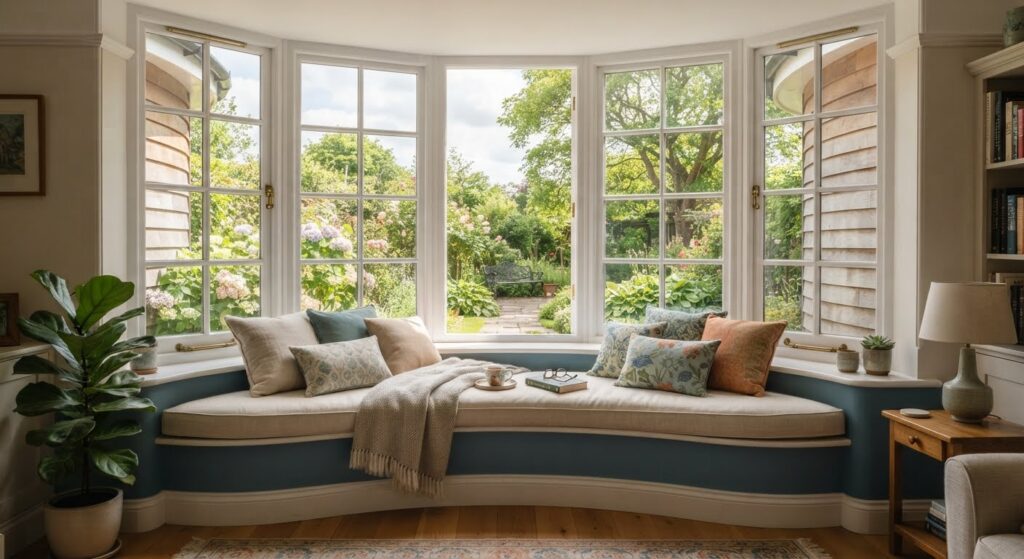
Bay window problems usually start small: a gap near the ceiling, a chilly window seat, or a faint stain on the head board. Because bay windows project beyond the wall, they face stresses that flat windows don’t, and small issues can grow if they’re ignored. Whether you’re troubleshooting an older unit or planning custom bay windows, here’s what to watch for and how each problem is fixed.
Sagging
Sagging is one of the most common issues with older bays. A bay window is heavy, and if it wasn’t properly supported, it can slowly pull away from the house over the years.
Signs of sagging include:
- Gaps between the top of the bay and the wall or ceiling
- Cracks in the drywall or trim around the window
- A window seat that slopes outward
- Side windows that stick or won’t close evenly
Sagging can often be corrected by adding a cable support system, brackets, or knee braces beneath the unit. If the frame has already been damaged, replacement with properly supported windows is usually the better fix.
Roof and Canopy Leaks
Most bay windows have a small roof or canopy above them. Where that roof meets the wall is a common leak point, especially if the flashing is missing, damaged, or poorly installed. Snow that sits on the bay roof and melts during Murray’s freeze-thaw cycles can also find its way into small gaps.
Watch for water stains on the head board above the window, peeling paint, or soft spots in the trim. Fixing the flashing or roofing early can prevent rot in the framing below.
Cold Window Seats and Drafts
A bay window seat should be a cozy spot, not the coldest place in the room. Many older bays have little or no insulation under the seat board or above the head board, so cold air radiates in during winter. Gaps where the bay meets the wall can also let drafts through.
Adding insulation, sealing gaps, and upgrading to an insulated seat board can make a noticeable difference. The Department of Energy window guide explains how window glazing, frames, and installation affect heat loss.
Condensation and Fogging
Condensation on the inside of the glass often points to high indoor humidity combined with cold glass, which is common in poorly insulated bays. Fog between the panes means the glass seal has failed. Replacing the glass or the full unit with energy-efficient insulated glass restores clear views and better comfort.
Rot at the Seat Board and Sill
Water from leaks or condensation often collects at the seat board and sill. Over time, this can cause rot that spreads into the supporting framing. Soft wood, dark stains, or peeling finish at the base of the bay are signs to have it inspected promptly.
When to Repair and When to Replace
 Minor issues like a small leak or missing insulation can often be repaired. If your bay has sagged significantly, has rot in the frame or supports, or still has old single-pane glass, replacement is usually the better long-term investment. An expert window installation team will support, flash, and insulate the new unit so the same problems don’t return.
Preventing Bay Window Problems
Most bay window problems come down to support, flashing, and insulation. Inspect your bay once a year, especially after winter, and address small gaps or stains before they turn into structural damage.
Have a bay window that’s sagging, leaking, or drafty? Call Murray Window Replacement at (385) 786-6447 or request a window replacement estimate to have it inspected.