

Window weep holes are small, easy-to-miss openings that play a big role in keeping water out of your walls. If you’ve ever noticed water pooling in a window track after a storm, or found tiny slots along the bottom of your window frame, you’ve seen them at work. Here’s what weep holes do, how to keep them clear, and when a drainage problem points to something bigger.
What Window Weep Holes Are
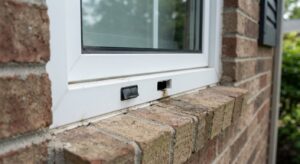 Weep holes are small slots or holes along the bottom of a window frame, usually on the exterior side. They’re common on vinyl replacement windows, aluminum windows, and sliding windows, and you’ll also find them on sliding patio doors. Many are covered by small flaps that let water out while keeping bugs and wind-driven rain from getting in.
Some windows also have interior weep openings inside the sill track that connect to the exterior holes. Not every window style has weep holes, so don’t worry if you can’t find them on every unit.
Why They Matter
Windows aren’t designed to be completely watertight at every joint. A little rain can get past the outer seals, especially during wind-driven storms, and collect in the bottom of the frame. Weep holes give that water a path back outside.
When weep holes are blocked, water has nowhere to go. It can overflow the track into your home or seep into the wall, where it can damage framing, sheathing, and insulation over time.
Which Windows Collect the Most Water
Horizontal slider windows and sliding patio doors are especially dependent on weep holes, because their bottom tracks naturally catch rain, snowmelt, and debris. Double-hung windows also drain through the sill on many models. Fixed and casement windows tend to collect less water, though many still include drainage paths.
Signs Your Weep Holes Are Clogged
- Water sitting in the window track long after rain stops
- Water overflowing onto the interior sill or floor
- Mildew, dirt buildup, or insect nests in the track
- Water stains on the wall or trim below the window
- In winter, ice forming in the track
How to Clean Window Weep Holes
- Locate the holes along the bottom of the frame outside and in the sill track inside.
- Vacuum loose dirt and debris from the track.
- Gently clear each hole with a pipe cleaner, thin brush, or flexible wire. Don’t enlarge the holes.
- Pour a small amount of water into the track and confirm it drains out the exterior holes.
- Check that any weep hole flaps open freely.
The Department of Energy’s Building America guide to cleaning weep holes includes a simple water test you can use to confirm drainage. Avoid blasting weep holes with a pressure washer, which can force water into the frame and wall instead of out.
Never Seal Weep Holes
One of the most common mistakes is covering weep holes with caulk or paint while sealing or painting around a window. A well-meaning fix can trap water inside the frame. If you’re recaulking, leave the weep holes and the bottom drainage path open.
How Often to Check Them
Inspect your weep holes at least once a year, ideally in the fall before snow and spring storms. Windows near landscaping, construction dust, or dirt roads may need more frequent cleaning.
When Leaks Point to a Bigger Problem
If water still gets in after your weep holes are clear, the issue may be failed seals, missing flashing, or improper installation. Professional window installation includes proper flashing and drainage details so water moves away from the wall, not into it. Older windows with recurring leaks are often better replaced than repaired.
Keeping Window Weep Holes Working
Clear window weep holes are one of the simplest ways to protect your windows and walls from water damage. A quick yearly check and cleaning goes a long way, and persistent leaks are a sign it’s time for a professional inspection.
Dealing with leaky windows? Call Murray Window Replacement at (385) 786-6447 or request a window replacement estimate to have them inspected.