
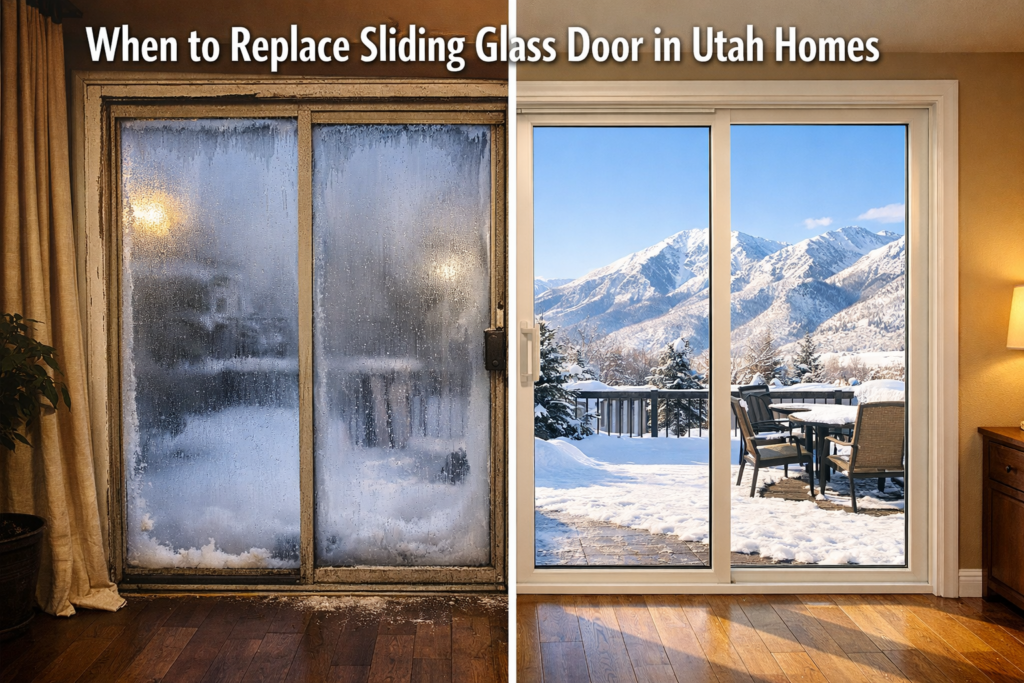
When to Replace Sliding Glass Door in Utah Homes?
Your sliding glass door should be replaced if you notice drafts, visible damage to the frame or glass, difficulty opening or closing, condensation between panes, or broken seals. In Utah’s climate, these issues often worsen during winter months when temperature swings stress aging materials. Most sliding doors last 20-25 years, but harsh weather conditions can shorten their lifespan significantly.
Sliding glass doors connect your home to the outdoors while providing natural light and access to patios or decks. But when they fail, they become energy drains that compromise your comfort and security.
Let’s explore the warning signs that indicate it’s time for a replacement and what you should do next.
Signs Your Sliding Glass Door Needs Replacement
Multiple indicators suggest your sliding door has reached the end of its useful life. Recognizing these signs early can prevent more expensive repairs down the road.
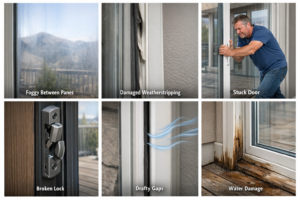
In short: Watch for drafts, operational problems, visible damage, and moisture issues—these are your door telling you it needs attention.
Difficulty Operating the Door
Does your sliding door require extra force to open or close? This isn’t just an inconvenience—it’s a safety concern.
Sticking, grinding, or jamming typically indicates worn rollers, damaged tracks, or a warped frame. In our experience, most homeowners notice this problem gradually worsening over months or years. What starts as a minor annoyance becomes a door that barely moves.
The diagnostic process usually reveals one of these culprits:
- Corroded or broken roller assemblies
- Bent or damaged aluminum tracks
- Frame warping from foundation settlement
- Accumulated dirt and debris in the track system
When the door won’t slide smoothly, forcing it can cause additional damage to the frame and increase security risks.
Drafts and Air Leakage
Stand near your sliding door on a cold Utah morning. Do you feel cold air seeping through?
Air leakage around sliding doors wastes energy and money. According to air sealing guidance from the Department of Energy, air leaks can account for 25-40% of heating and cooling energy use in typical homes.
Common leak points include:
- Weatherstripping that has dried, cracked, or pulled away
- Gaps between the door frame and wall
- Poor seals where the sliding panel meets the stationary panel
- Bottom track areas where seals have deteriorated
You can test for drafts by holding a lit candle near the door edges on a windy day (safely, and never leave unattended). If the flame flickers significantly, you have air infiltration.
Condensation Between Glass Panes
Foggy glass that won’t wipe clean indicates a failed seal between double-pane glass. This means the insulating gas has escaped and moisture has entered.
Once this happens, the door has lost its energy efficiency. The condensation won’t go away—it’s trapped inside the glass unit. This problem only gets worse over time, creating permanent cloudiness and potential mold growth.
What we typically see during inspections is that seal failure often starts small in one corner and gradually spreads across the entire glass area.
Visible Damage to Frame or Glass
Cracks in the glass, even small ones, compromise both safety and security. Damaged frames—whether dented, rotting, or corroded—can’t properly support the door or maintain weathertight seals.
Pay special attention to:
- Cracks or chips in the glass panels
- Rust or corrosion on metal frames
- Warping or bowing of the frame structure
- Gaps where the frame meets the wall
A common mistake we encounter is homeowners postponing replacement when they notice minor frame damage. Unfortunately, small problems accelerate quickly, especially in Utah’s freeze-thaw cycles.
Failed or Broken Locks
Security concerns demand immediate attention. If your sliding door lock is broken, worn, or doesn’t engage properly, your home is vulnerable.
Locks fail due to:
- Worn internal mechanisms from years of use
- Misalignment caused by frame warping or settling
- Corrosion from moisture exposure
- Impact damage from forced entry attempts
A door that can be lifted off its track or doesn’t lock securely needs professional door replacement immediately.
Water Damage or Rot Around the Frame
Notice water stains, soft spots, or visible rot near your door frame? This signals serious moisture intrusion that threatens your home’s structure.
Water damage occurs when:
- Failed weatherstripping allows rain to penetrate
- Improper installation lacks adequate flashing
- Cracked seals permit water entry during storms
- Poor drainage causes water accumulation in the track
Addressing water damage early prevents costly structural repairs later.
Increasing Energy Bills
Have your heating or cooling costs risen significantly? An inefficient sliding door could be the culprit.
Energy waste happens when seals fail, allowing conditioned air to escape continuously. According to ENERGY STAR certification standards, replacing old doors with energy-efficient models can save homeowners an average of $126 annually on utility bills.
Compare your current bills to previous years—significant increases often indicate door failure.
How Utah’s Climate Affects Sliding Door Lifespan
Utah’s unique weather patterns place exceptional demands on sliding glass doors. Understanding when to replace your sliding glass door in Utah starts with knowing these climate challenges.
In short: Temperature extremes, UV exposure, and seasonal transitions accelerate wear on door components, particularly seals and frames.
Temperature Fluctuations
Utah experiences dramatic temperature swings—sometimes 30-40 degrees in a single day. These cycles cause materials to expand and contract repeatedly.
Metal frames expand in summer heat and contract in winter cold. This constant movement stresses seals, weatherstripping, and the glass itself. Over time, this leads to gaps, cracks, and seal failures.
Winter temperatures in Murray regularly drop below freezing, while summer afternoons can exceed 95°F. This 150+ degree annual range is tough on any building material.
High Altitude UV Exposure
Utah’s elevation means stronger ultraviolet radiation reaching your home. UV rays degrade plastic components, weatherstripping, and even some glass coatings faster than in lower-elevation areas.
Research from the National Renewable Energy Laboratory indicates that UV exposure increases approximately 10-12% for every 3,300 feet of elevation gain. Murray sits at roughly 4,300 feet, meaning higher UV exposure than many other regions.
This accelerated weathering affects:
- Vinyl and rubber weatherstripping
- Plastic roller wheels and guides
- Frame finishes and coatings
- UV-protective glass coatings
Seasonal Maintenance Challenges
Snow accumulation against sliding doors can force moisture into tracks and seals. Ice formation can damage the bottom track and prevent proper drainage.
Spring thaw cycles bring temperature changes that stress already weakened seals. Summer heat expansion can cause previously stable doors to bind or stick.
When to Call a Professional
Some sliding door issues require immediate professional attention. Attempting repairs yourself can lead to injury or property damage.
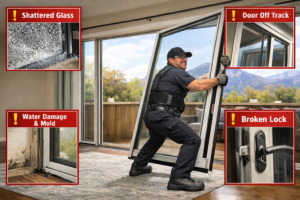
In short: Contact a professional immediately for structural issues, broken glass, security concerns, or if the door is completely inoperable.
Safety Red Flags
Never attempt to repair or replace a sliding glass door yourself if you notice:
- Broken or shattered glass (risk of severe cuts)
- A door that has come off its track and is unstable
- Structural damage to the wall or frame surrounding the door
- Electrical issues with integrated blinds or locks
Heavy glass doors can weigh 100-200 pounds or more. Without proper equipment and training, attempting removal risks serious injury. A common mistake we encounter is homeowners underestimating the weight and complexity of these installations.
Security Vulnerabilities
If your sliding door won’t lock properly or the locking mechanism is broken, you have a security emergency. Doors that don’t secure leave your home vulnerable to break-ins.
Professional assessment is crucial when:
- Lock mechanisms are broken or ineffective
- The door can be lifted off the track from outside
- Large gaps exist between the door and frame
- Previous break-in attempts have damaged hardware
Structural Concerns
Water damage around the door frame, rotting wood, or visible mold growth indicates moisture intrusion that needs immediate attention. These conditions often signal problems beyond just the door itself.
Professional replacement doors services can identify whether the issue is limited to the door or if underlying structural problems need addressing first.
The Professional Replacement Process
Understanding what happens during a professional sliding door replacement helps you know what to expect and prepare accordingly.
In short: The process involves assessment, precise measurement, removal of the old door, frame preparation, installation, and final adjustments—typically completed in one day.
Initial Assessment and Measurement
A professional installer begins by examining your existing door opening, checking for:
- Square and plumb conditions of the rough opening
- Level foundation and sill
- Condition of surrounding wall structure
- Proper drainage and waterproofing
Precise measurements are critical. Even 1/4 inch variations can affect door operation and energy efficiency. After hundreds of door installation projects, we’ve learned that thorough measurement prevents costly callbacks and adjustments.
Removal and Preparation
The old door is carefully removed to avoid damaging surrounding walls and flooring. This includes:
- Detaching interior trim and molding
- Removing the sliding panels
- Taking out the stationary panel
- Extracting the old frame
- Cleaning and preparing the rough opening
The opening is inspected for water damage, rot, or structural issues that need correction before the new door installation.
Installation and Sealing
The new door frame is positioned, shimmed level and plumb, and secured. Proper installation techniques include:
- Setting the sill with waterproof underlayment
- Using appropriate fasteners for your wall type
- Installing flashing to prevent water intrusion
- Applying sealant at critical junctions
- Insulating gaps with expanding foam (where appropriate)
Glass panels are installed into the frame, rollers adjusted, and the locking mechanism aligned. Everything is tested for smooth operation.
Final Adjustments and Weatherproofing
The installer makes final adjustments to ensure:
- Smooth sliding action without sticking
- Proper alignment of locking points
- Weatherstripping contact around all edges
- Correct clearances preventing air infiltration
Interior and exterior trim is installed, gaps are caulked, and the area is cleaned. You should be able to operate your new door effortlessly with one hand.
Selecting the Right Replacement Door
Not all sliding doors offer the same performance in Utah’s climate. Choosing appropriate features ensures long-term satisfaction and energy savings.
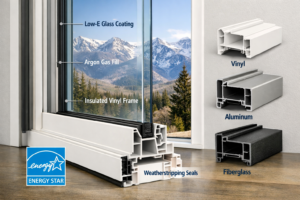
In short: Prioritize energy efficiency, durable materials, quality glass packages, and proper sizing for Utah’s climate demands.
Energy Efficiency Features
Look for doors with ENERGY STAR certification for the Northern climate zone. These doors meet strict efficiency standards that reduce heating and cooling costs.
Key efficiency features include:
- Low-E glass coatings: Reflect heat while allowing light transmission
- Argon or krypton gas fills: Provide better insulation between panes
- Insulated frames: Aluminum frames with thermal breaks or vinyl construction
- Quality weatherstripping: Multi-point sealing systems
The EPA estimates that ENERGY STAR certified products can save homeowners an average of $126 per year on utility bills.
Frame Material Considerations
Three primary frame materials dominate the market:
Vinyl: Low maintenance, good insulation, resistant to moisture and corrosion. Best value for most homeowners. Learn more about vinyl windows benefits.
Aluminum: Extremely durable and slim profiles allow more glass area. Requires thermal breaks for energy efficiency. Can dent or corrode in harsh conditions.
Fiberglass: Superior strength and insulation, lowest maintenance, excellent for extreme temperatures. Higher initial cost but longest lifespan.
For Utah’s climate, vinyl and fiberglass frames typically perform best due to temperature stability and moisture resistance.
Glass Package Options
Standard double-pane glass is minimum for energy efficiency. Consider upgrading to:
- Triple-pane glass: Superior insulation for extreme cold, though heavier and more expensive
- Tempered or laminated safety glass: Required by International Building Code standards for doors
- Tinted or reflective coatings: Reduce heat gain from southern exposure
Your door’s orientation affects glass selection. South-facing doors benefit from solar heat gain coatings in winter, while west-facing doors need heat-rejecting glass for afternoon sun.
Proper Sizing and Configuration
Sliding doors come in various sizes and configurations:
- Two-panel (one stationary, one sliding)
- Three-panel (two stationary, one sliding or vice versa)
- Four-panel (multiple sliding and stationary options)
In our experience, most homeowners notice better long-term performance when they maintain or slightly reduce the size of their door opening rather than expanding it. Larger openings require more extensive structural work and have more potential for problems.
Maintenance Tips to Extend Door Life
Proper maintenance significantly extends sliding door lifespan and performance. These simple tasks prevent many common problems.
In short: Regular cleaning, lubrication, and seal inspection keep your sliding door operating smoothly for decades.
Regular Track Cleaning
Dirt, leaves, and debris accumulate in bottom tracks, causing operating problems and premature wear. Clean tracks every few months:
- Vacuum loose debris from tracks
- Wipe tracks with a damp cloth
- Use a soft brush for stubborn dirt
- Dry thoroughly to prevent rust
Keep drainage holes (weep holes) clear to prevent water accumulation that can damage the sill and promote mold growth.
Roller and Hardware Maintenance
Sliding door rollers need periodic attention:
- Lubricate rollers annually with silicone spray (never oil-based products)
- Check for wear or damage during cleaning
- Adjust roller height if the door becomes difficult to operate
- Inspect and tighten loose screws in handles and locks
These small tasks prevent larger problems and maintain smooth operation.
Weatherstripping Inspection
Check weatherstripping twice yearly—before winter and before summer. Look for:
- Cracks or tears in rubber seals
- Compressed or flattened areas that no longer seal
- Gaps where stripping has pulled away from the frame
- Hard or brittle rubber indicating age deterioration
Weatherstripping is relatively inexpensive to replace and dramatically improves energy efficiency. However, if stripping fails repeatedly within a few years, the door frame may have alignment issues requiring professional assessment.
Glass and Frame Care
Clean glass surfaces regularly to prevent mineral deposits and maintain visibility. Use vinegar solution or commercial glass cleaner.
For frames:
- Wipe vinyl or fiberglass frames with mild soap and water
- Touch up paint on aluminum frames to prevent corrosion
- Check caulking around exterior perimeter annually
- Address any separation or cracking immediately
Proper care extends door life significantly, but even well-maintained doors eventually need replacement.
Cost Factors for Replacement
Several variables affect sliding door replacement costs. Understanding these helps you budget appropriately and make informed decisions.
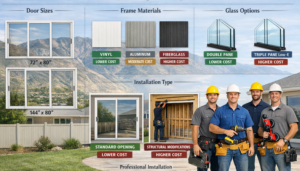
In short: Costs vary based on door size, materials, glass options, structural modifications, and installation complexity—professional installation ensures proper performance.
Door Quality and Features
Entry-level doors provide basic functionality at lower cost. Mid-range doors offer better energy efficiency and durability. Premium doors include superior materials, multiple glass panes, and advanced features.
Consider long-term value rather than just initial cost. A higher-quality door may cost more initially but saves money through:
- Lower energy bills from better insulation
- Fewer repairs over its lifetime
- Longer service life before replacement
- Better security features
- Enhanced home value
Installation Complexity
Standard replacement into an existing opening costs less than installations requiring:
- Structural modifications to the opening
- Repairs to water-damaged framing
- Custom sizing for non-standard openings
- Additional exterior finishing work
Foundation issues, wall settling, or previous poor installations can complicate the replacement and increase costs.
Additional Considerations
Other factors affecting project cost:
- Disposal of old door and materials
- Trim and finishing requirements
- Upgrading to energy-efficient windows and doors simultaneously
- Local permit and inspection fees
Some homeowners choose to coordinate sliding door replacement with other window replacement projects for efficiency and potential cost savings.
Conclusion
Your sliding glass door plays a critical role in your home’s comfort, energy efficiency, and security. When you notice drafts, operational problems, condensation between panes, or visible damage, it’s time to replace your sliding glass door in Utah. Utah’s extreme climate demands high-performance doors that can withstand temperature swings, UV exposure, and seasonal challenges.
Professional installation ensures your new door performs optimally for decades. The investment pays for itself through lower energy bills, improved comfort, and enhanced home value.
Ready to discuss your sliding door replacement in Murray, UT? Call (385) 786-6447 or contact Murray Window Replacement for a professional door assessment. We’ll inspect your door and provide options before any work begins, helping you make informed decisions about your patio doors and door replacement needs.
Frequently Asked Questions
How long do sliding glass doors typically last in Utah?
Most quality sliding glass doors last 20-25 years with proper maintenance, though Utah’s temperature extremes and high UV exposure can reduce this to 15-20 years for lower-quality doors. Doors facing south or west deteriorate faster due to increased sun exposure. Once seals fail or frames warp, complete replacement is typically more cost-effective than repairs.
Can I replace just the glass instead of the entire door?
Glass-only replacement is possible if the frame is in excellent condition, but this approach rarely makes financial sense long-term. If your glass needs replacement, frame components, weatherstripping, and seals are likely also near failure. Complete door replacement provides better value and performance for most homeowners.
What’s the best time of year to replace a sliding door in Utah?
Late spring through early fall offers ideal weather conditions, but reputable installers work year-round using temporary weather barriers. Don’t delay necessary replacement due to season—an inefficient door wastes energy daily. Winter installation is possible and sometimes offers faster scheduling.
Will a new sliding door really reduce my energy bills?
Yes, significantly—the U.S. Department of Energy estimates air leakage through old doors and windows accounts for 25-40% of heating and cooling costs. A new ENERGY STAR certified sliding door reduces this loss substantially. Most homeowners notice lower utility bills within the first few months.
Do I need a permit to replace my sliding glass door in Murray, UT?
Most municipalities require permits for door replacement to ensure compliance with building codes for safety glass, structural integrity, and energy efficiency. Licensed contractors typically handle permit applications and inspections as part of their service. Check with Murray’s building department or contact a professional installer who manages permits.
How do I know if my door problem is just the rollers or something more serious?
If the door is difficult to slide but shows no visible damage, good seals, and no drafts, rollers might be the only issue. However, multiple symptoms like sticking combined with drafts, condensation, or frame damage typically indicate the entire door needs replacement. Professional inspection provides accurate diagnosis—when one major component fails, others are usually near failure too.