
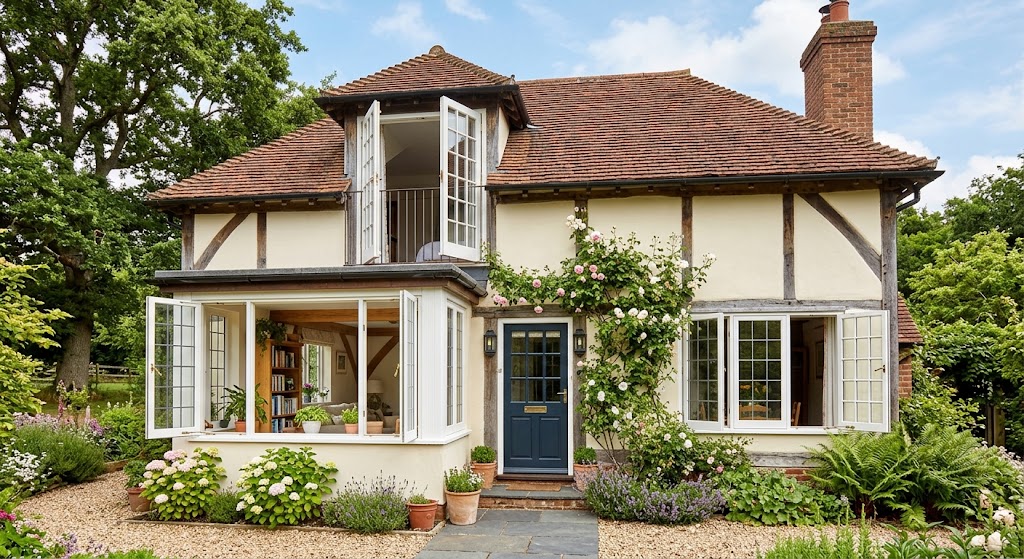
Casement window ventilation works differently from other window types, and a few simple habits can make it work far better in a Murray home. Because a casement sash swings outward on a hinge, it can open nearly the full sash opening and scoop passing breezes into the room, something a double-hung window, which opens only about half its height, can’t do.
This guide covers how to catch breezes, cool your home on summer nights, handle humid rooms, and know when to keep your windows shut on Utah’s bad air days. If you’re thinking about adding or replacing windows, see our casement window options.
How a Casement Window Catches Breezes
A casement sash opens like a small door. Open it so the sash swings toward the oncoming breeze, and it acts like a scoop, funneling air that’s moving along the wall into the room. Notice which direction the breeze usually blows past your house, and you can choose which windows to open and which way to crank them.
Cross-Ventilation That Works
Casement window ventilation is most effective when air has a path through the house:
- Open windows on different walls, ideally opposite sides, so air enters on one side and exits on the other.
- Open a lower window on the shady side and a higher window on the opposite side so warm air can rise out.
- Leave interior doors open so air can move between rooms.
- Use a fan near an open window to help pull air through on still days.
Cooling Your Home on Summer Nights
Summer nights in Murray often cool off considerably, even after a hot day. Open your casements in the evening once the air outside is cooler than the air inside, and let them run overnight. In the morning, close the windows and shade them before the heat builds, so the cool air stays inside.
Standard window air conditioners generally don’t fit casement windows, so natural night cooling is one of the best ways to take the edge off a hot house.
Bathrooms, Kitchens, and Moisture
A casement above the kitchen sink or in a bathroom can release steam and cooking moisture quickly, and the crank means you can open it without leaning over a counter. A window doesn’t replace an exhaust fan, so use both when moisture is heavy.
Placement and Safety
Where you put a casement matters because the sash swings outward:
- Avoid placing them beside walkways, patios, or decks where an open sash could hit someone.
- Close them in strong wind, since an open sash catches gusts and can strain the hinges and arm.
- Crack them only slightly in light rain, or close them, since an open sash can let rain in.
- If children are in the home, add window stops or limiters so the window can’t open fully when unattended.
If rain is a concern, awning window options hinge at the top, so the open sash helps shed light rain while still letting air in.
When to Keep Windows Closed in Murray
Fresh air isn’t always fresh in the Salt Lake Valley. Winter inversions trap pollution near the ground, and summer wildfire smoke can do the same. Check Utah’s real-time air quality conditions before opening up. On days when the air is rated good or moderate, open your windows to refresh your home. On bad air days, keep them closed.
A tight seal makes closed days more comfortable. Well-built energy efficient windows keep outdoor air and temperature swings out, so you aren’t trading air quality for comfort.
Making the Most of Casement Window Ventilation
With the right placement and a few habits, casement windows can cool, freshen, and de-humidify your home without any extra equipment. If you’re ready to explore new windows, contact Murray Window Replacement or call (385) 786-6447.