
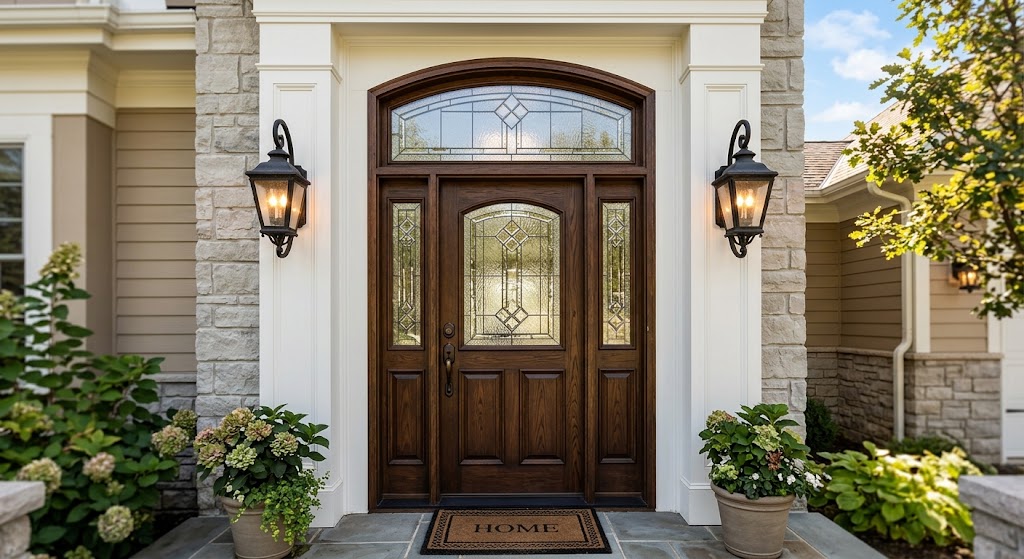
Choosing between custom or standard doors comes down to a few practical questions: does a standard size fit your opening, how much design flexibility do you need, and how much time and budget do you have? This guide explains what each term means, when each one makes sense, and what to ask before you order.
What “Standard,” “Semi-Custom,” and “Custom” Mean
- Standard (stock): Common sizes and styles that are usually available quickly. A typical entry door is 36 inches wide and 80 inches tall.
- Semi-custom: A standard design where you choose options such as size within limits, glass style, finish, and hardware.
- Fully custom: A door built to your specifications for size, shape, materials, and details.
These terms vary by manufacturer, so always ask how a company defines “custom” before you compare prices.
When Standard Doors Make Sense
A standard door is usually the right call when your opening is a common size, your budget is tight, or you need the project done on a schedule. Many stock entry door styles already come in fiberglass and steel with insulated cores and a wide range of finishes, so you can get a good-looking, well-performing door without paying for custom work. Standard sizes are also the easiest to install and to replace later.
When Custom Doors Are Worth It
Custom makes sense when a stock door can’t do the job:
- Your opening is oversized, unusually tall, arched, or otherwise non-standard.
- Your older home has frames that don’t match modern sizes, and you’d rather build the door to fit than reframe the opening.
- You want specific glass shapes, sidelites, or transoms sized to match your home’s architecture.
- You need a particular material, finish, or detail that stock options don’t offer.
If you’re not sure whether a standard size will fit, a door replacement service can measure the opening and tell you before you commit.
The tradeoffs are real. Custom orders cost more, take longer to build and ship, and are often non-returnable, so check the policy before you order.
Don’t Overlook Energy Performance
 Customizing can change how well a door insulates. A larger glass area, a different glass type, or a non-standard size can all affect the rating, and some custom builds aren’t rated at all. Whether you choose custom or standard doors, ask whether the exact configuration you’re buying has an NFRC rating.
ENERGY STAR’s certification guidelines explain that certified windows, doors, and skylights must be independently tested under NFRC procedures, and that the NFRC label lists the ratings.
Measurements, Lead Times, and Installation
Don’t rely on the size of your old door. Have the rough opening measured, including how square it is, the wall thickness, and the swing direction. Ask for the lead time in writing, since custom doors can take several weeks or more to arrive.
A custom door is only as good as its fit. When the door arrives, inspect it for damage and confirm it matches your order before installation day, and rely on door installation services to set it plumb, shimmed, and sealed.
Questions to Ask Before You Order
- Is this door standard, semi-custom, or fully custom by your definition?
- What is the lead time, and can you put it in writing?
- Does this exact configuration have an NFRC rating?
- What does the warranty cover, and does customization change it?
- Can the order be changed or returned?
- Who measures the opening, and who is responsible if the door doesn’t fit?
Making the Call on Custom or Standard Doors
For many Murray homes, a well-chosen standard or semi-custom door is all you need. When the opening, the architecture, or the design calls for more, custom is worth the extra cost and wait. If you’d like help deciding, contact Murray Window Replacement or call (385) 786-6447.