
Choosing between double-pane vs. triple-pane windows is one of the biggest glass decisions you’ll make when replacing windows. Both offer a major upgrade over single-pane glass, but they differ in cost, weight, and how much extra performance they deliver. If you’re comparing energy-efficient replacement windows, here’s how to decide which option fits your home and budget.
How Double-Pane Windows Work
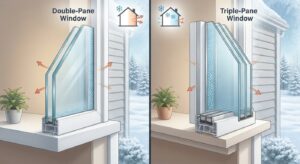
A double-pane window has two panes of glass separated by a sealed space, usually filled with argon gas. Paired with a Low-E coating, this setup slows heat transfer through the glass and handles most climates well. It’s the standard choice for replacement windows today.
How Triple-Pane Windows Work
A triple-pane window adds a third pane and a second sealed space. That extra layer of gas and glass further reduces heat transfer, and many triple-pane units also use multiple Low-E coatings or krypton gas for even better insulation.
Where Triple-Pane Windows Have the Edge
- Lower U-factor: Triple-pane glass typically insulates better, which means less heat loss in winter.
- Warmer interior glass: The inside pane stays closer to room temperature, reducing cold spots and condensation.
- Comfort near large windows: Big glass areas feel less drafty in cold weather.
- Some noise reduction: The extra pane can help with outside noise, though laminated glass usually does more for sound.
Where Double-Pane Windows Make More Sense
- Lower cost: Double-pane windows cost noticeably less, and the energy savings from upgrading to triple-pane can take many years to pay back.
- Lighter weight: Triple-pane glass is heavier, which puts more strain on sashes, balances, and hinges. Fixed picture windows handle the extra weight easily since they have no moving sash, while large operable windows may need heavier-duty hardware.
- More daylight: Each added pane and coating slightly reduces visible light and winter solar heat gain.
- Wider product choice: Some styles and frame profiles aren’t offered with triple-pane glass.
What Murray’s Climate Means for Your Choice
Murray has cold winters with frequent freezing nights and hot, sunny summers. A quality double-pane window with Low-E glass and argon fill performs well here for most homes. Triple-pane glass becomes more worthwhile on north-facing walls, in rooms with large glass areas, in homes where winter comfort is the top priority, or if you plan to stay in the home for many years.
Compare the Ratings, Not Just the Pane Count
The number of panes doesn’t tell the whole story. A well-designed double-pane window can outperform a poorly made triple-pane unit. Compare U-factor, Solar Heat Gain Coefficient, and visible transmittance on each window’s label, and look for ENERGY STAR certified windows rated for your climate.
Mixing Double-Pane and Triple-Pane
 You don’t have to choose one option for the whole house. Many homeowners use double-pane glass in most rooms and upgrade to triple-pane in bedrooms, north-facing rooms, or living areas with big windows. Ask your contractor which custom replacement windows can be ordered with either glass package.
Choosing Between Double-Pane vs. Triple-Pane Windows
For most Murray homes, double-pane windows with Low-E glass deliver the best balance of cost and performance. Triple-pane windows make sense where comfort, large glass areas, or long-term ownership justify the extra investment. Comparing double-pane vs. triple-pane windows by their ratings and your goals will lead you to the right choice.
Ready to compare glass options? Call Murray Window Replacement at (385) 786-6447 or request a window replacement estimate to get started.