
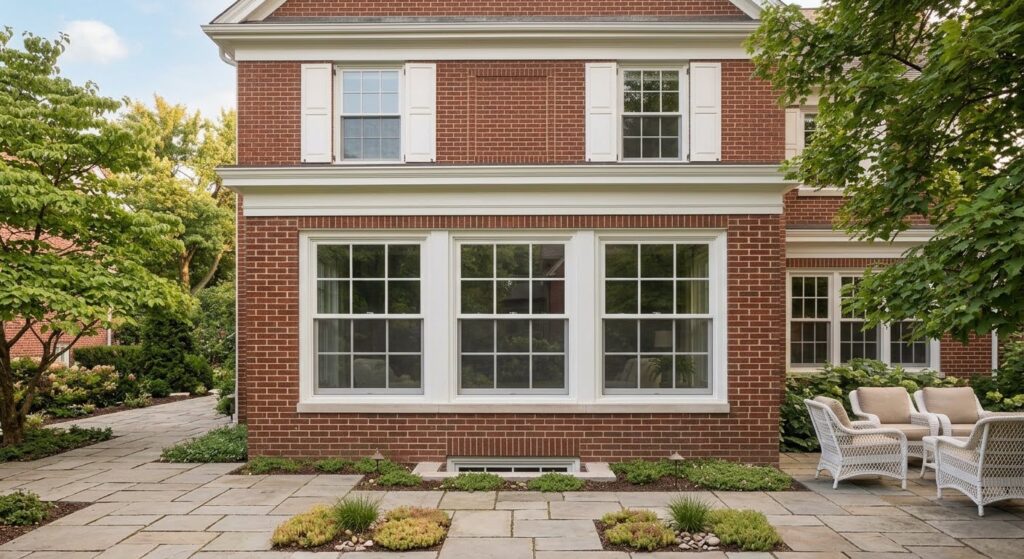
Single-hung vs. double-hung windows look almost identical from the street, but they work differently in ways that affect ventilation, cleaning, safety, and cost. Both are traditional, vertically sliding windows that suit a wide range of homes. If you’re deciding between them or comparing classic double-hung windows with a lower-cost option, here’s what sets them apart.
How Each Window Works
A single-hung window has two sashes, but only the bottom one moves. The top sash is fixed in place, and the bottom sash slides up to open.
A double-hung window has two operable sashes. You can raise the bottom sash, lower the top sash, or open both at once. On most modern double-hung windows, both sashes also tilt in for cleaning.
Ventilation
Double-hung windows offer more control over airflow. Opening the top sash lets warm air escape near the ceiling, while opening the bottom sash draws cooler air in. Opening both at the same time creates natural circulation through the room.
Single-hung windows only open at the bottom, so they offer less flexibility, though they still ventilate well for most rooms.
Cleaning
 With a double-hung window, you can tilt both sashes inward and clean the outside of the glass from inside your home. That’s a real advantage on second-floor windows. Many single-hung windows let you tilt the bottom sash, but the exterior of the fixed top sash usually has to be cleaned from outside.
Safety
Double-hung windows let you open just the top sash for fresh air while keeping the lower opening closed. That can help in children’s rooms, where a window open at the bottom poses a fall risk. Window opening control devices can add another layer of protection on either style.
Energy Efficiency
Because a single-hung window has one fixed sash, it has fewer moving parts and seals that can let air through. That can give it a slight edge in airtightness. With quality windows, though, the difference is small, and glass, frame material, and installation have a much bigger effect. Compare the ratings of ENERGY STAR certified windows rather than relying on window style alone.
Cost
Single-hung windows usually cost less than double-hung windows of the same size and material, since there are fewer moving parts. For homeowners replacing many windows, that savings can add up, especially with vinyl replacement windows, where single-hung models are widely available.
Egress Considerations
Both styles open only about halfway, so the clear opening is smaller than the window itself. If a bedroom or basement window needs to meet egress requirements, you may need a larger window or a different style. Crank-out casement windows open fully and often provide more clear opening for the same window size.
Which Should You Choose?
Single-hung windows may be the better fit if:
- You’re working with a tighter budget
- The windows are on the ground floor and easy to clean from outside
- You want a simple, low-maintenance option
Double-hung windows may be the better fit if:
- The windows are on upper floors
- You want more control over ventilation
- You have young children and want to open the top sash only
Choosing Between Single-Hung vs. Double-Hung Windows
The right choice between single-hung vs. double-hung windows comes down to how you use each room, where the windows are located, and your budget. Many homeowners use double-hung windows upstairs and single-hung windows on the ground floor to balance convenience and cost.
Not sure which style fits your home? Call Murray Window Replacement at (385) 786-6447 or request a window replacement estimate to compare your options.