
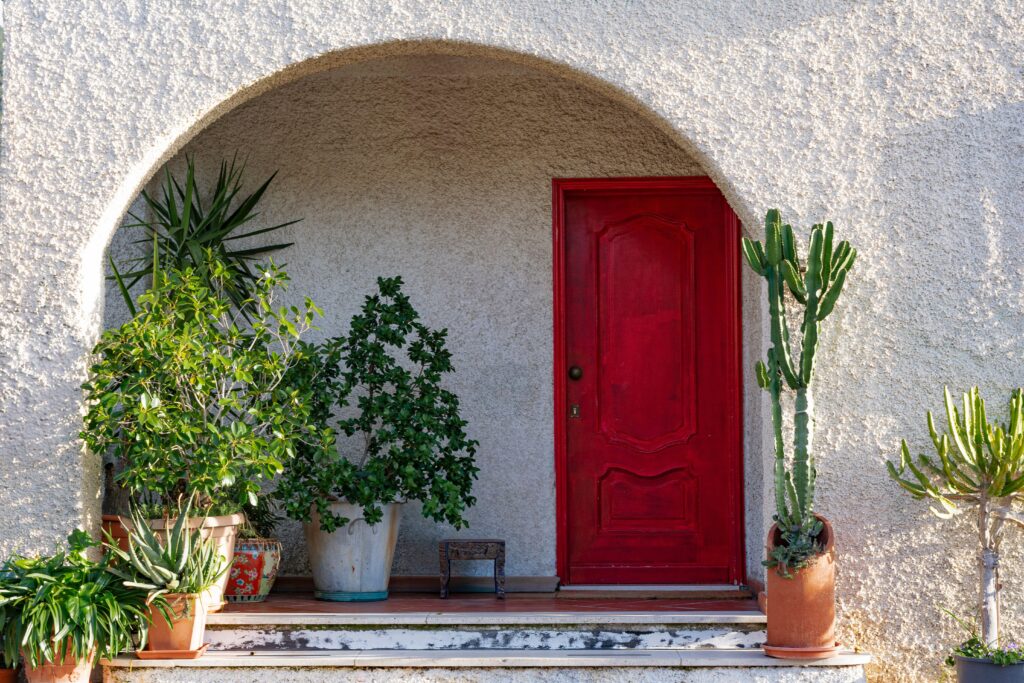
Choosing the right door swing direction is one of the most overlooked decisions when ordering a new door, and one of the hardest to change later. The swing affects how traffic flows through your entry, where furniture can go, and even how well the door handles weather. Before you order new replacement doors, here’s how door handing works and how to choose the right swing for each opening.
What Door Handing Means
Every swinging door has a hand, which describes two things: which side the hinges are on, and whether the door swings in or out.
- Left-hand inswing: Hinges on the left, door opens away from you.
- Right-hand inswing: Hinges on the right, door opens away from you.
- Left-hand outswing (or reverse): Hinges on the left, door opens toward you.
- Right-hand outswing (or reverse): Hinges on the right, door opens toward you.
For exterior doors, handing is usually determined by standing outside, facing the door as if you’re about to walk in.
Why Handing Gets Confusing
Not every manufacturer uses the same convention. Some determine handing from the outside, some from the side the door swings toward, and some by standing with your back to the hinges. This independent guide to door handing shows how easily the terms get mixed up. To avoid ordering mistakes, describe your door by which side the hinges are on as seen from outside, and whether you push or pull to enter, and let your installer confirm the measurements.
Replacing a Door: Keep the Same Swing or Change It?
When you’re replacing an existing door, keeping the same handing is usually the simplest choice, since light switches, furniture, and traffic patterns are already set up around it. If the current swing has always been awkward, replacement is the best time to change it.
Changing the swing usually requires a new prehung door and frame, since the hinge and strike locations are reversed. A professional door replacement service can tell you whether the opening and surrounding walls allow a different swing.
Inswing vs. Outswing for Exterior Doors
 Most exterior doors in the US swing inward. Inswing doors keep the hinges inside, out of reach, and work well with storm doors. Their main drawback is that they need clear floor space inside the entry.
Outswing doors save interior space and press tighter against their weatherstripping when wind pushes on them. They need security hinges with non-removable pins, and a landing or porch large and level enough for the door to swing over. When you compare exterior entry door options, ask whether the model you like is available in both swings.
How to Choose the Right Door Swing Direction
Walk through the space and consider:
- Light switches: The door should swing away from the switch so it’s easy to reach when you walk in.
- Walls and furniture: The door should open against a nearby wall, not into the middle of the room.
- Traffic flow: Think about where people walk after they enter and which way they naturally turn.
- Stairs and landings: Doors shouldn’t swing over steps.
- Double doors: Decide which door will be the active one you use every day.
Getting Your Door Swing Direction Right
The right door swing direction makes a door feel natural every time you use it. Keep the current swing if it works, change it if it doesn’t, and confirm the handing with your installer before the door is ordered.
Planning a door replacement? Call Murray Window Replacement at (385) 786-6447 or request a door replacement estimate for help choosing the right swing for every opening.