
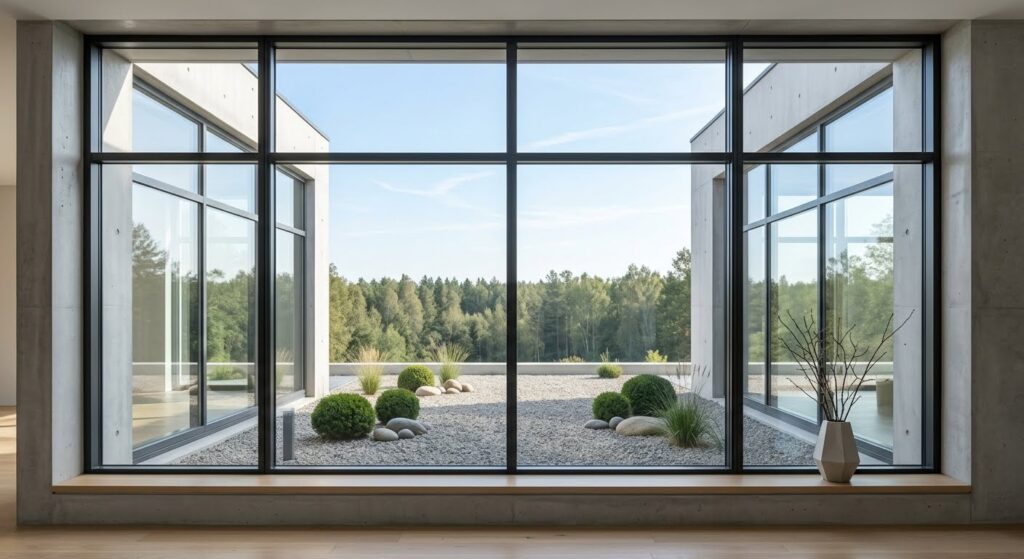
Window combinations let you join two or more windows into a single, larger unit, creating wider views and more light than any one window can provide. They’re a popular way to update a living room, kitchen, or great room, and they let you mix fixed glass with windows that open. Here’s how combination windows work and how to choose the right setup for your home.
What Is a Mulled Window?
When two or more windows are joined side by side or stacked, the connection between them is called a mullion, and the finished assembly is called a mulled unit. The mullion ties the windows together structurally and seals the joint between them against air and water.
Windows can be mulled at the factory or joined on site. Factory-mulled units are assembled and sealed under controlled conditions, which generally makes them the more reliable choice for weather resistance.
Popular Window Combinations
Picture Window With Flanking Casements
One of the most popular setups places a large fixed picture window in the center with an operable casement on each side. You get an uninterrupted view in the middle and fresh air on both ends.
Twin and Triple Double-Hung Windows
Two or three classic double-hung windows mulled side by side create a wide, traditional look. This combination suits Colonial, Craftsman, and many older homes.
Picture Window With an Awning
Pairing a picture window with an awning window above or below adds ventilation while keeping most of the glass fixed. Awnings can stay open in light rain, which makes them a practical partner.
Transom Windows
A fixed transom above a window or group of windows adds height and light, especially in rooms with high ceilings. Arched or half-round transoms can soften a straight row of windows.
Bay and Bow Windows
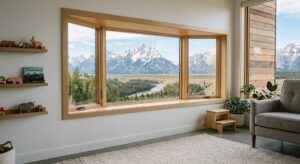 Bay and bow windows are combination units that project outward from the wall. A projecting bay window typically uses a large center window with two angled side windows, while a bow uses four or more equal windows in a gentle curve. Both add light, space, and room for a window seat.
What to Consider Before You Combine Windows
Structure
Large mulled units carry more weight and wind load, and wide assemblies may need a reinforced mullion. If you’re enlarging an opening to fit a bigger combination, the wall may need a new header to carry the load above it, and a building permit may be required.
Ventilation and Egress
Decide which sections need to open. If the window is in a bedroom, at least one operable section must meet egress requirements on its own.
Energy Efficiency
More glass means more potential heat loss in winter and heat gain in summer. In Murray’s climate, choose insulated, Low-E glass, and compare ENERGY STAR window ratings for your climate before you finalize a large combination.
Appearance
Match frame colors, grid patterns, and sightlines across every unit so the combination reads as one cohesive window rather than several separate ones.
Choosing Window Combinations for Your Home
The right window combinations balance view, ventilation, and efficiency while fitting your home’s style. Start with how the room is used, then decide where you want fixed glass and where you want windows that open.
Ready to design a combination that fits your space? Call Murray Window Replacement at (385) 786-6447 or request a window replacement estimate to explore your options.