

Regular entry door maintenance keeps your front door looking good, sealing tight, and working smoothly for years. A few simple checks each season can prevent drafts, sticking, and finish damage, especially in a climate like Murray’s, with snowy winters and strong summer sun. Whether you have an older door or new durable front entry doors, here’s how to care for each material and the parts every door shares.
Fiberglass Doors
Fiberglass is one of the lowest-maintenance door materials. It resists dents, doesn’t rust, and won’t warp or swell with moisture.
- Clean with mild soap and water a few times a year, and avoid abrasive cleaners that can dull the finish.
- If your fiberglass door is stained to look like wood, plan to refresh the clear topcoat every few years, especially on sun-facing doors.
- Painted fiberglass doors usually need only occasional touch-ups.
Steel Doors
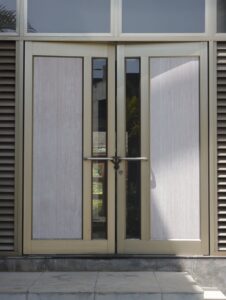 Steel doors are strong and secure, but their finish is their main protection against rust.
- Inspect the door for scratches and chips, especially near the bottom and around the handle, and touch them up promptly so moisture can’t reach the bare metal.
- Wash with mild soap and water, then dry the surface.
- If you add a storm door in front of a dark-colored steel or fiberglass door, check the door manufacturer’s guidelines. Heat can build up between the two doors in direct sun and damage the finish.
Wood Doors
Wood doors offer unmatched natural warmth but need the most care.
- Inspect the finish at least once a year. When the clear coat looks dull, worn, or cracked, it’s time to refinish.
- Doors facing south or west, or without a porch overhang, may need refinishing more often.
- Make sure all six sides of the door, including the top and bottom edges, are sealed to keep moisture out.
- Watch for cracks, gaps between panels, and soft spots near the bottom of the door.
Weatherstripping and Door Sweeps
Weatherstripping is the most important part of entry door maintenance, since it keeps drafts, dust, and water out. Check it every fall before cold weather arrives. If it’s torn, flattened, or brittle, or if you can see daylight around the door, replace it. The Department of Energy’s guide to weatherstripping recommends a thickness that presses tightly between the door and jamb when the door closes without making it hard to shut. Check the door sweep at the bottom of the door, too.
Thresholds and Sills
Many exterior doors have adjustable thresholds that can be raised slightly to close a gap under the door. Keep the sill clean and clear of debris so water can drain properly. During winter, sweep away snow and ice that collect against the threshold, and avoid letting de-icing salt pile up against the door. If a gap remains after adjustment, the door may not be sitting level, which is a job for professional door installation.
Hinges, Locks, and Hardware
- Tighten loose hinge screws, which can cause a door to sag and rub.
- Lubricate hinges once or twice a year.
- Use a dry lubricant such as graphite or a product made for locks on your lockset and deadbolt, since oily lubricants can attract dirt.
- Check that the latch and deadbolt line up smoothly with the strike plate.
Caulk and Exterior Trim
Inspect the caulk around the exterior trim each year. Cracked or missing caulk lets water get behind the trim and into the wall. Recaulk any gaps with an exterior-grade sealant.
When Entry Door Maintenance Isn’t Enough
Good entry door maintenance extends a door’s life, but it can’t fix everything. If your door still drafts after new weatherstripping, sticks despite adjustment, or shows rot, rust-through, or cracks, a professional front door replacement is usually the better investment.
Have a door that needs more than maintenance? Call Murray Window Replacement at (385) 786-6447 or request a door replacement estimate to have it inspected.