
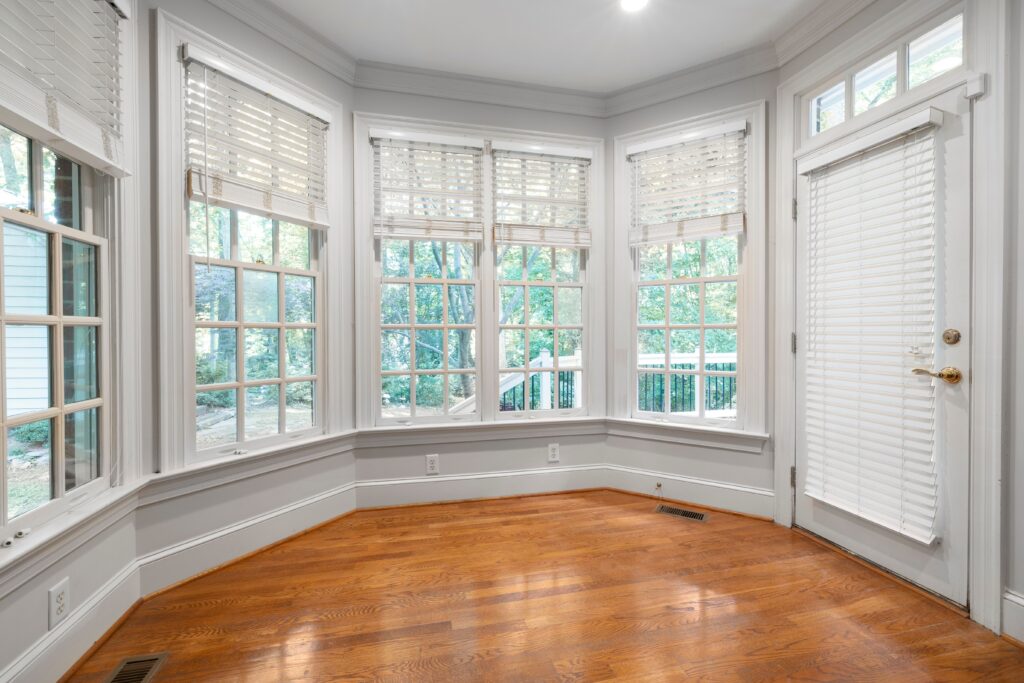
Residential windows can improve your home in more ways than most people expect. Changing your windows adds natural light to a room and makes it feel larger, and it can meaningfully increase your home’s energy efficiency and lower your utility bills. Here’s a closer look at how the right windows pay off in durability, efficiency, low maintenance, and safety.
Durability
New windows do more than update your home’s look — they hold up against the elements. Modern frame materials like vinyl and fiberglass resist rot, warping, and moisture damage far better than older wood windows, and impact-rated glass options can withstand high winds and storm debris in a way aging windows often can’t.
That durability also translates into security: intact, well-sealed windows are far harder to force open than windows with worn frames or failing hardware, helping protect your home and the people in it.
Energy Efficiency
Replacing inefficient windows with new ENERGY STAR certified vinyl, wood, or fiberglass windows lowers your energy costs and reduces your home’s environmental footprint — and depending on where you live, qualifying ENERGY STAR purchases may even be eligible for a federal tax credit.
Low-E coatings and argon or krypton gas fills are two of the biggest efficiency upgrades available today. When comparing windows, look for both the ENERGY STAR label and National Fenestration Rating Council (NFRC) ratings, which report a window’s U-factor, solar heat gain coefficient (SHGC), visible light transmittance, air leakage, and condensation resistance — the independently verified numbers behind an efficiency claim.
Tempered safety glass, often paired with these efficient glazing packages, adds another benefit: it’s designed to break into small, rounded pieces rather than sharp shards if it’s ever broken.
Low Maintenance
 Unlike older wood windows that need regular painting or refinishing, modern vinyl replacements hold their finish for decades and clean up with little more than soap and water. Many also feature tilt-in sashes, so you can wash both sides of the glass from inside your home without a ladder.
That low-maintenance design pays off over the life of the window: fewer repairs, no repainting, and a warranty that backs the materials for years to come.
Egress Windows
Windows do more than let in light — in a bedroom, basement, or other living space, they can also be your only way out during an emergency. That’s why building codes require egress windows: openings large enough, and easy enough to operate, for someone to escape safely if needed. If your basement includes a bedroom or other habitable space, that requirement almost certainly applies to you.
The good news is that code updates have made it easier to retrofit older homes with compliant egress windows — especially with professional egress window installation — relaxing some of the minimum opening size and sill-height requirements specifically for replacements in existing basements, attics, and sleeping rooms. If a permanent step or ladder is needed to reach the window, it has to be installed without blocking the window’s clear opening.
Being able to open a window quickly, without special tools or know-how, matters for fire safety in any room — not just basements required to have an egress window.
See How Residential Windows Can Improve Your Home Today
If you’re ready to see how residential windows can improve your home’s durability, efficiency, and safety, Murray Window Replacement can help — including code-compliant egress window installations for your basement. Contact us or call (385) 786-6447 to schedule a consultation.